
The constitutional revision vote earlier this week set the political tone for the weeks ahead, with 33 articles passing by 158-161 votes — short of the 180 required to lock in changes in the next parliament, meaning the revision exercise has effectively served as an electoral positioning exercise rather than a substantive reform milestone. The plenary debate previewed the campaign dynamics ahead, with a sharp Mitsotakis-Androulakis confrontation dominating proceedings.
Parliament simultaneously voted 264-2 to lift Avramopoulos' immunity in connection with the Belgian Qatargate warrant — a significant institutional moment for a ruling party MP — and 175-90 to lift Konstantopoulou's immunity over defamation charges. The most destabilising political development, however, was Ilias Kasidiaris's announcement, immediately upon release from Domokos prison, of plans to launch a new party — reportedly to be called Alliance of Greeks, with three independent lawmakers linked to Kasidiares as formal founders, while Kasidiaris himself serves as an "associate." The Supreme Court has previously barred Kasidiaris-linked formations from elections; legal proceedings will determine whether this structure circumvents that ruling.
Polling this week confirmed the broad contours of a deeply fragmented landscape. New Democracy leads at 25.7-26.5% across two surveys, with ELAS at 13.2-15% and PASOK at 10.1-10.5%. Seat projections from the more detailed poll suggest ND at 126 seats — well short of the 151 needed for a majority — with ELAS at 49, PASOK at 38, Greek Solution at 24, KKE at 21, Hope for Democracy at 15 and Voice of Reason at 10. Only 32% evaluated Mitsotakis's TIF performance positively, with 54% negative. On inflation, 31% said "none" when asked which leader's proposals best address the issue. Internal ND polling shows a cool reception from business owners and farmers, with pensioners and civil servants marginally more positive. The government is entering an extended pre-electoral period without a fixed date but with a clear direction: spring 2027, with the intervening months focused on legislative delivery and retail politics.
On the security front, Turkey escalated rhetoric significantly following Mitsotakis's visit to Kastellorizo. Both the Turkish Foreign Ministry and Defence Ministry challenged the island's military status under the 1947 Paris Peace Treaty, with Fidan describing Greek island militarisation as a security threat and urging Greece to meet its treaty obligations "in a more mature way." Athens rejected the claims as baseless and contradictory — given Turkey's own standing casus belli — and reiterated Greece's right to defend its sovereign territory. The escalation is being read in Athens as directly linked to the Achilles' Shield agreement with Israel, the forthcoming delivery of PULS precision-strike systems to Greek islands, and the imminent restart of the Great Sea Interconnector under French majority ownership.
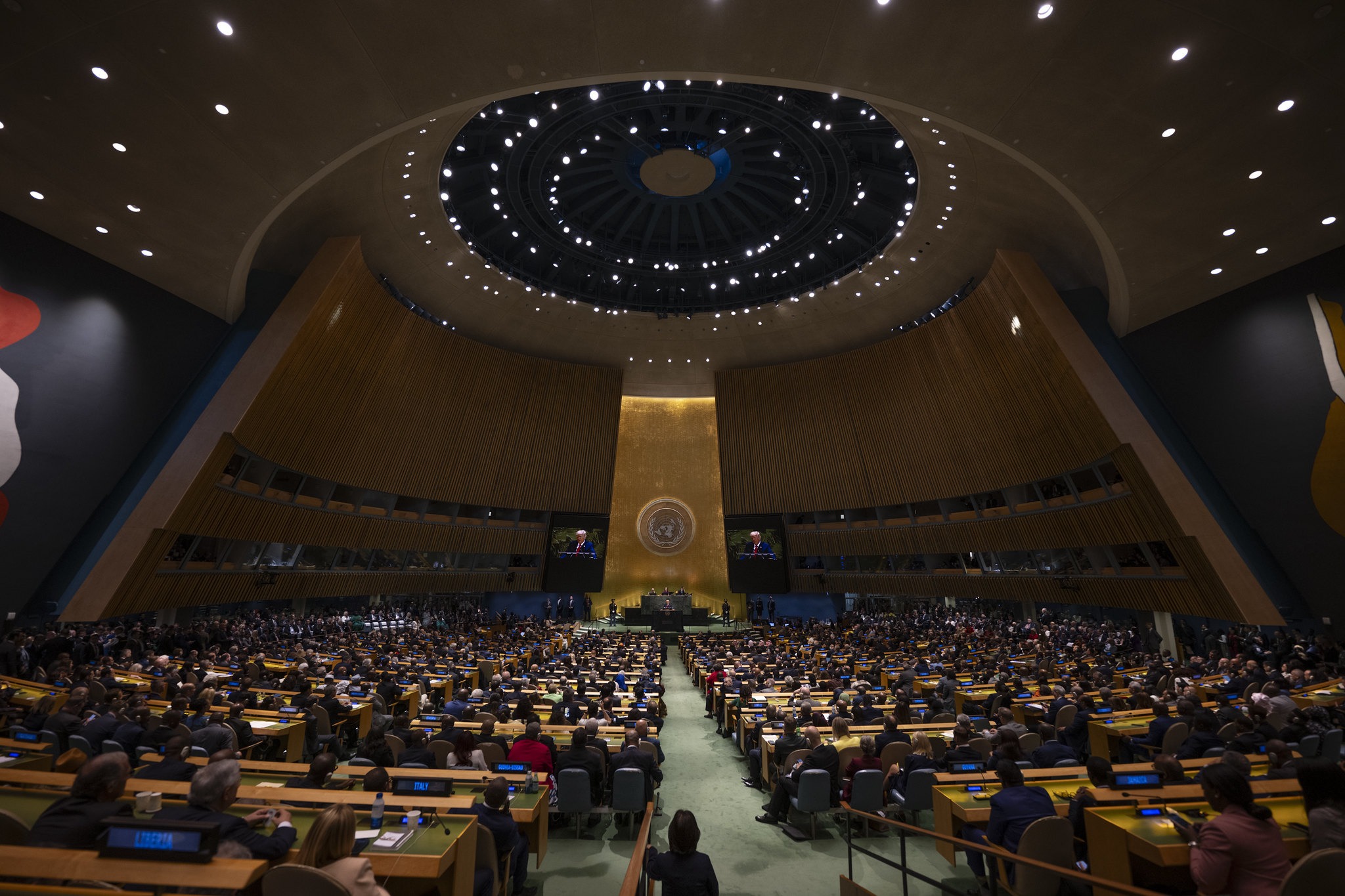
No Mitsotakis-Erdogan meeting is scheduled at the UN General Assembly in New York, with both sides keeping expectations low. US Secretary of State Rubio is however expected in Athens in the first ten days of October, with discussions to focus on irregular migration, border security and counter-terrorism cooperation.
The economic data painted a familiar dual picture. The state budget primary surplus reached €6.5 billion for January-August, exceeding the target by €1.5 billion, though the underlying outperformance adjusted for timing differences is a more modest €185 million. Bank of Greece inflation projections were revised to 3.5% for 2026, easing to 2.7% in 2027 and 2.2% in 2028. Greek banks continued to outperform European peers: return on equity rose to 12.29% against a European average of 10.73%, the cost-to-income ratio fell to 36.96% against 53.06% for European banks, and the non-performing loan ratio stands at 2.98% — still the highest in the eurozone but a tenth of the level recorded five years ago. FMCG supermarket sales rose 5.6% in value in the first seven months, with food the main driver. Regional airport traffic exceeded seven million passengers in August for the first time in a single month. Greece formally established a committee to examine nuclear energy's potential role in the future energy mix — a first institutional step, with an initial assessment expected within 12 to 18 months.
Social indicators continued to complicate the prosperity narrative. Young adults leave the parental home at an average age of 31 — second latest in the EU after Croatia, against an EU average of 26.3 — with 79% of young Greeks spending more than 40% of their income on housing, the highest share recorded by Eurofound, against a backdrop of 10.1% rent increases in 2025. The counterpart to this is the emergence of working pensioners as a structural labour market feature: declared working retirees have risen from 25,000-30,000 before 2023 to over 308,000 today, with farmers accounting for 45% of the total.
Taken together, this is a Greece in active pre-electoral mode, where the gap between institutional performance and household experience is the central political fault line, where Turkish escalation is testing the durability of Athens's deterrence posture, and where the social indicators — housing, youth, pensions — are quietly redrawing the terms of the political debate.