

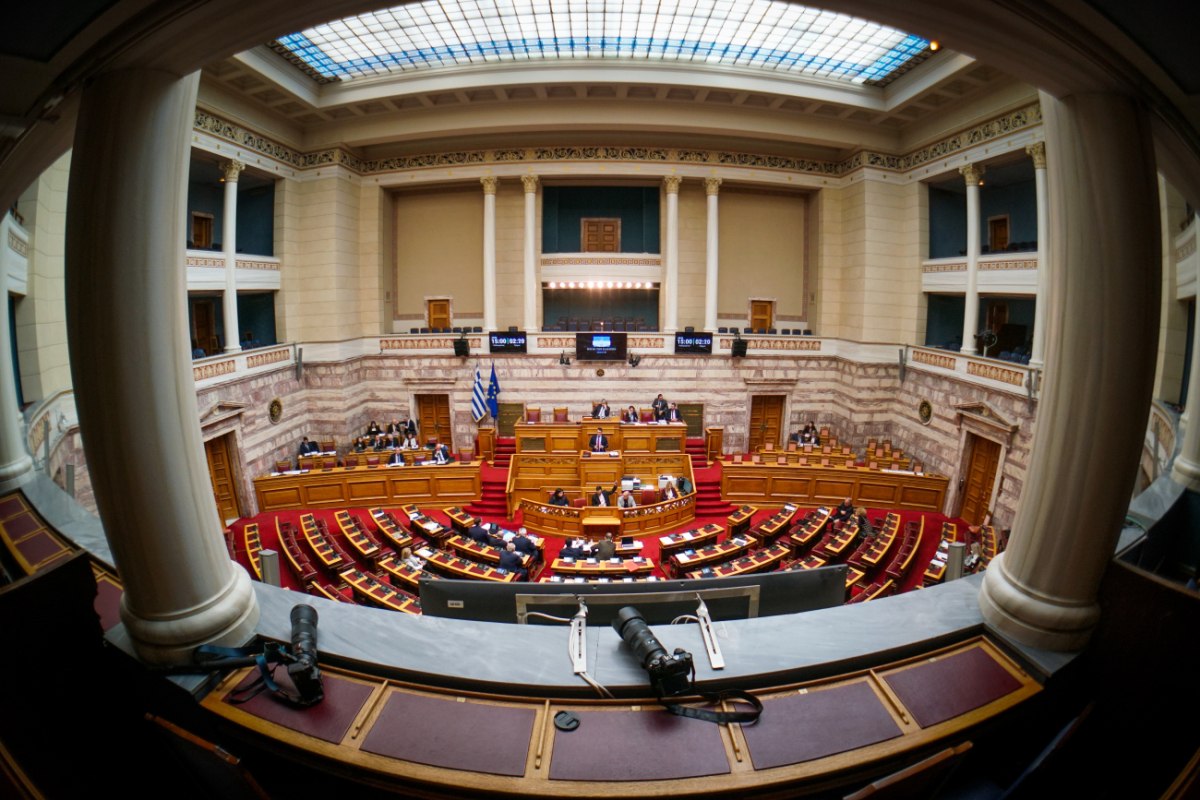
The political tone was set by a highly charged parliamentary debate on the rule of law, which quickly evolved into a direct confrontation between the Prime Minister and opposition leaders. The discussion brought together multiple fault lines — the surveillance affair, the OPEKEPE investigation and broader questions of institutional accountability — with the government defending its record and accusing the opposition of political instrumentalization, while opposition parties framed the moment as evidence of systemic erosion. The intensity of the exchange underlines a shift toward a more polarized pre-electoral environment, even as elections remain formally distant.
At the same time, an important — though less visible — institutional development is underway. Plans to overhaul Parliament’s rules of procedure are advancing, with proposed changes touching both the legislative process and the conduct of lawmakers. These include stricter disciplinary measures, potential adjustments to parliamentary broadcasting rules, and reforms aimed at improving the quality of lawmaking. While still in preparation, the initiative reflects a broader attempt to modernize parliamentary functioning and respond to longstanding concerns about institutional credibility.
At the core of the domestic picture lies a deepening cost-of-living challenge. A new study confirms that rental costs in Athens have reached structurally unsustainable levels, with households spending up to 70% of income on a one-bedroom apartment and over 90% on larger units. Combined with persistently high fuel prices and broader inflationary pressures, this reinforces a clear political risk: economic strain is no longer cyclical, but increasingly structural.
At the same time, Greece continues to position itself as an active geopolitical player in a highly volatile environment. High-level engagement with European and international partners, including discussions with the European Council President and the upcoming visit of the French President, underline Athens’ role in regional stability and defense cooperation. Parallel discussions on maritime security in the Strait of Hormuz and closer ties with Gulf states further reflect the widening scope of Greece’s foreign policy footprint.
Domestically, however, pressure is building on multiple fronts. The OPEKEPE case is now moving into a decisive parliamentary phase, with votes on lifting immunity for lawmakers expected in the coming days. Coming immediately after the parliamentary confrontation, the case reinforces the sense of institutional strain and keeps political risk elevated. The government maintains a position of procedural confidence, but the cumulative effect of these developments is clearly increasing scrutiny.
The broader political landscape is also evolving. While the government insists on completing its term, the combination of institutional pressure, reform efforts and economic uncertainty is fueling renewed speculation about the electoral timeline. At the same time, opposition dynamics remain fluid, with multiple actors attempting to reposition themselves in a fragmented environment.
Looking ahead, the economic agenda enters a critical phase. A series of upcoming milestones — including Eurostat fiscal data, IMF and World Bank assessments, and credit rating reviews — will determine the extent of fiscal flexibility available to the government. While recent fiscal performance remains strong, the outlook is becoming more complex, with growth expectations moderating and inflation risks rising.
*Written from Athens. Focused on power, institutions and political behavior — beyond the headlines.