

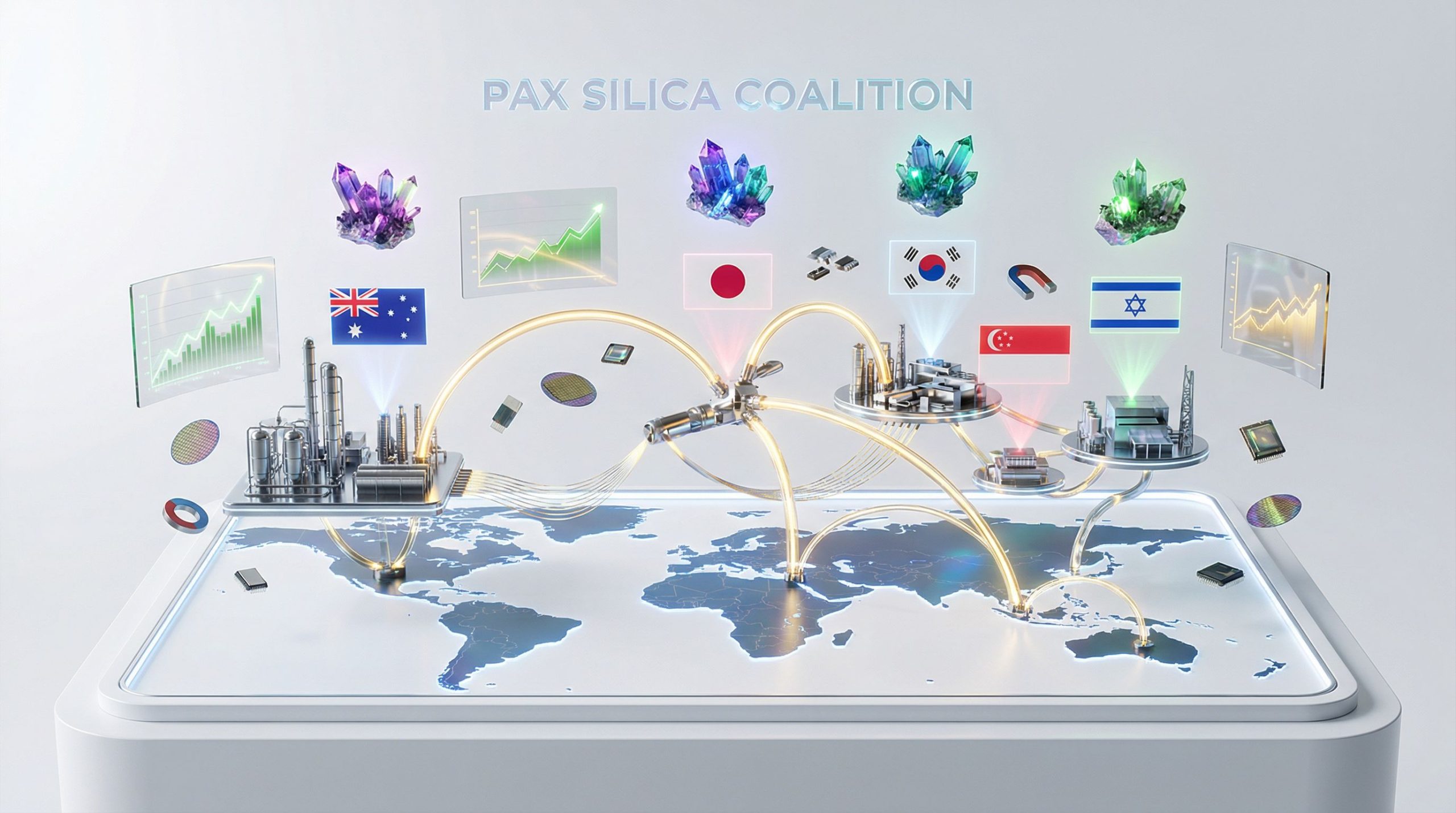
On the diplomatic and security front, Greece formally joined the US-led Pax Silica initiative, a technology-security pact some in Washington describe as a "technology NATO," signed in Washington by Greece's ambassador and a senior State Department official — a move officials frame as a significant step in reshaping Western strategy in the Eastern Mediterranean. This sits alongside the Senate Foreign Relations Committee's advancement of the Eastern Mediterranean Gateway Act, which effectively designates Greece, Cyprus, Israel and Egypt as strategic partners.
At the same time, Washington is preparing to approve a sale of GE jet engines worth over $700 million to power Turkey's indigenous Kaan fighter jet, despite unresolved Congressional objections — a gesture to Ankara ahead of next month's NATO summit in Turkey, even as the F-35 dispute over Turkey's S-400 acquisition remains unresolved. Athens is also voicing quiet concern over warming Turkey-Egypt ties, after Cairo failed to inform Greece of a four-party meeting involving Saudi Arabia, Pakistan and Turkey, compounding existing friction over Saint Catherine's Monastery and incomplete maritime coordination. Turkish intelligence chief Ibrahim Kalin's visit to Benghazi, received by Saddam Haftar, underscores Ankara's continued push for influence in eastern Libya.
Separately, Belgium's European arrest warrant against New Democracy lawmaker and former European Commissioner Dimitris Avramopoulos, tied to the Qatargate investigation, has been formally received and forwarded by Greek authorities, who rejected his claim that the warrant lacked judicial legitimacy.
Domestically, polling shows the gap between New Democracy and Tsipras's ELAS narrowing to 6.9 points — the tightest margin since Mitsotakis became party leader in 2016 — with ND's vote intention slipping nearly two points to 25.8%. ELAS has consolidated a clear second place, while PASOK and Karystianou's Hope for Democracy trade places for third. Voters cite problem-solving ability and honesty as their top criteria for judging parties, with deep skepticism toward government communication tools on the cost-of-living crisis in favour of price controls and tax cuts.
In response, New Democracy is quietly reinforcing weak spots in Macedonia and the Peloponnese, courting Karamanlis-aligned local networks via Dora Bakoyannis, while publicly insisting elections remain set for 2027. Bakoyannis also broke from the party line on constitutional reform, opposing a proposed shift to a single six-year presidential term. Tsipras, meanwhile, unveiled ELAS's full shadow cabinet across six policy areas and declared in a television interview that his movement aims to govern, not merely protest — explicitly ruling out a return to SYRIZA or cooperation with existing progressive parties.
On the economic front, Greece's state budget posted a surplus of €103 million for January-May, sharply outperforming a forecast deficit of €2.176 billion, with the primary surplus reaching €3.65 billion against a €1.243 billion target. Tourism delivered a standout performance: travel receipts for January-April rose 36.9% year-on-year to €2.79 billion, with arrivals up 27.1% to 5.24 million, led by a surge in UK visitor spending. Energy markets saw extraordinary investor demand, with PPC's capital raise drawing €18 billion against a €4.5 billion target and IPTO's raise pulling in €3.5 billion against €530 million sought — activity widely attributed to American funds positioning Greece as a future US LNG transit hub for the wider region.
Property transfer tax revenue rose 7.3% in the first four months of the year, though April alone saw a notable slowdown, while parental property transfers continued climbing steadily. Bank of Greece Governor Yannis Stournaras was sworn in for a third six-year term, becoming the country's longest-serving central bank chief since 1974.
On social and structural indicators, Greece ranked 32nd of 169 countries in the 2026 Sustainable Development Report, narrowly above the OECD average, with persistent weaknesses in obesity, air pollution, road deaths and renewable energy share. More strikingly, new Eurostat data show employment among recent Greek graduates collapsing to just 62.4% — last in the EU and a ten-point drop from the previous year — with growth instead concentrated in tourism and hospitality roles that favour students and older re-entrants over university graduates. A new gender pay equity bill was tabled in parliament, aiming to close Greece's 13.4% gender pay gap, above the EU average of 11.1%, through mandatory salary transparency and a ban on prior-salary questions in hiring.
Taken together, the week illustrates a Greece pursuing deeper strategic alignment with Washington at a moment of regional flux, even as its domestic political contest tightens and its labour market reveals a widening mismatch between education and opportunity that prosperity figures alone do not capture.
* Written from Athens. Focused on power, institutions and political behavior — beyond the headlines.