

Tourism sustainability emerged as a growing concern following a new University of the Aegean study showing that several islands now host more than four tourist beds per permanent resident, placing increasing pressure on local infrastructure, housing and natural resources. The findings add momentum to the ongoing debate around overtourism and the long-term sustainability of Greece’s tourism model.
Regional security issues remained high on the agenda. Tensions with Turkey resurfaced following renewed Turkish references to the demilitarization of eastern Aegean islands and reports concerning Ankara’s “Blue Homeland” doctrine. At the same time, Athens announced it will submit a formal diplomatic protest to Ukraine after Greek authorities concluded that an explosive-laden maritime drone discovered near Lefkada was of Ukrainian origin. Greece also continued to reinforce the strategic importance of Alexandroupoli as a key energy, logistics and defense hub for NATO and the wider region.
Migration policy advanced as the government submitted legislation implementing the EU Migration Pact ahead of its entry into force on 1 July. The new framework will require Greece to process asylum claims more rapidly at border facilities while strengthening return procedures for migrants not eligible for international protection. Meanwhile, the government is also moving forward with legislation that would prohibit minors from using electric scooters on public roads following growing concerns over road safety.
Artificial intelligence remained a major policy priority. The government presented draft legislation implementing the EU AI Act, creating a comprehensive national governance framework, assigning supervisory responsibilities to key authorities, establishing regulatory sandboxes for innovation and introducing a public-sector AI registry aimed at enhancing transparency and accountability. The Ministry of Development also announced plans for a new €150 million program to support the adoption of AI technologies by small and medium-sized enterprises.
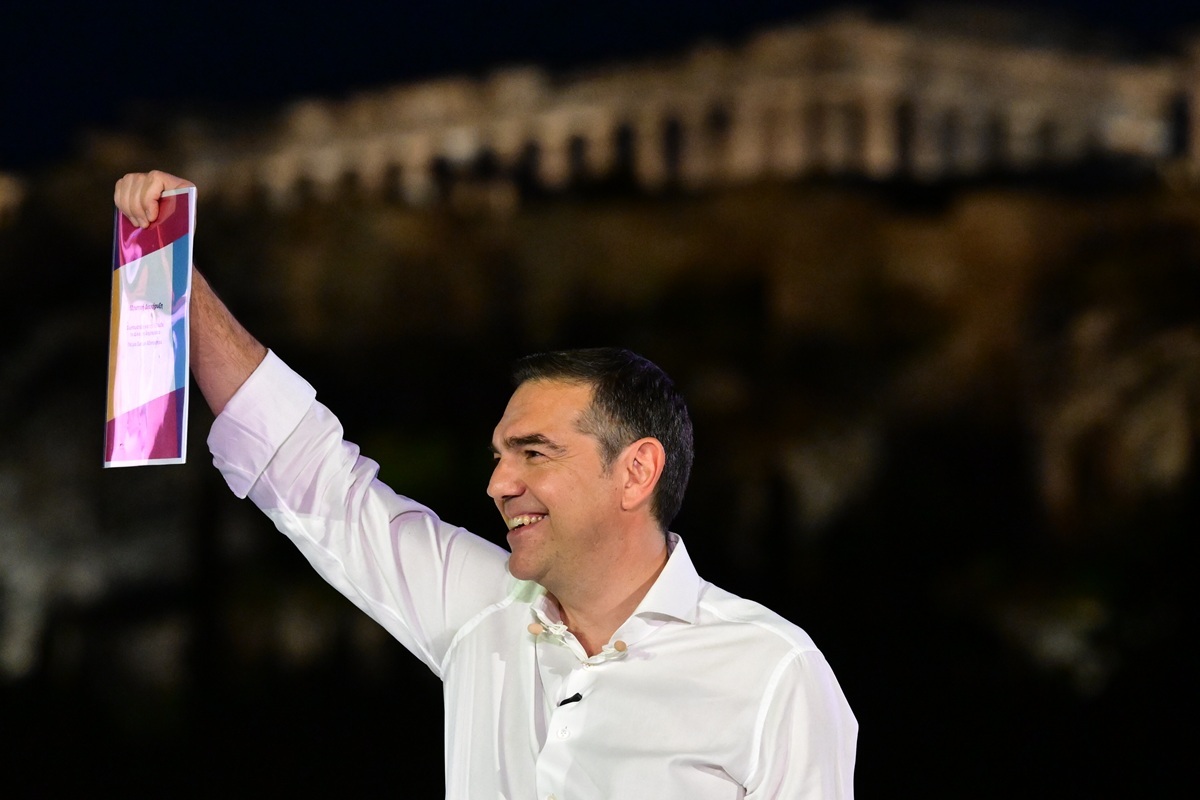
Politically, the landscape continues to fragment. Former Prime Minister Alexis Tsipras formally launched his new political party, EL.A.S., positioning it as a broad center-left alternative focused on living standards, democratic accountability and social cohesion. His return has already reshaped opposition dynamics, with some polls placing the new party ahead of PASOK and emerging as the principal challenger to New Democracy. At the same time, Maria Karystianou’s newly launched movement and the prospect of a future party led by former Prime Minister Antonis Samaras are adding further uncertainty to an already crowded political environment.
On the economic front, international institutions continue to view Greece relatively positively despite external shocks. The IMF concluded that the Greek economy has demonstrated resilience amid the Middle East crisis, supported by strong investment activity, fiscal discipline and reforms linked to the Recovery and Resilience Facility (RRF). Nevertheless, both the IMF and the European Commission warned that higher energy costs, geopolitical instability and delays in RRF implementation remain important downside risks.
The government is also preparing new initiatives to attract more productive foreign direct investment, focusing on sectors such as manufacturing, artificial intelligence, biotechnology, logistics and defense industries. Additional developments included a new request for €1.63 billion in RRF disbursements, Chevron’s move to acquire a majority stake in an offshore hydrocarbon concession in the Ionian Sea, and continued efforts to expand preventive healthcare programs and strengthen gender pay transparency through the transposition of relevant EU legislation.
Taken together, the week underscored the government’s effort to balance economic modernization and technological transformation with growing geopolitical uncertainty and an increasingly competitive domestic political environment.
* Written from Athens. Focused on power, institutions and political behavior — beyond the headlines.