

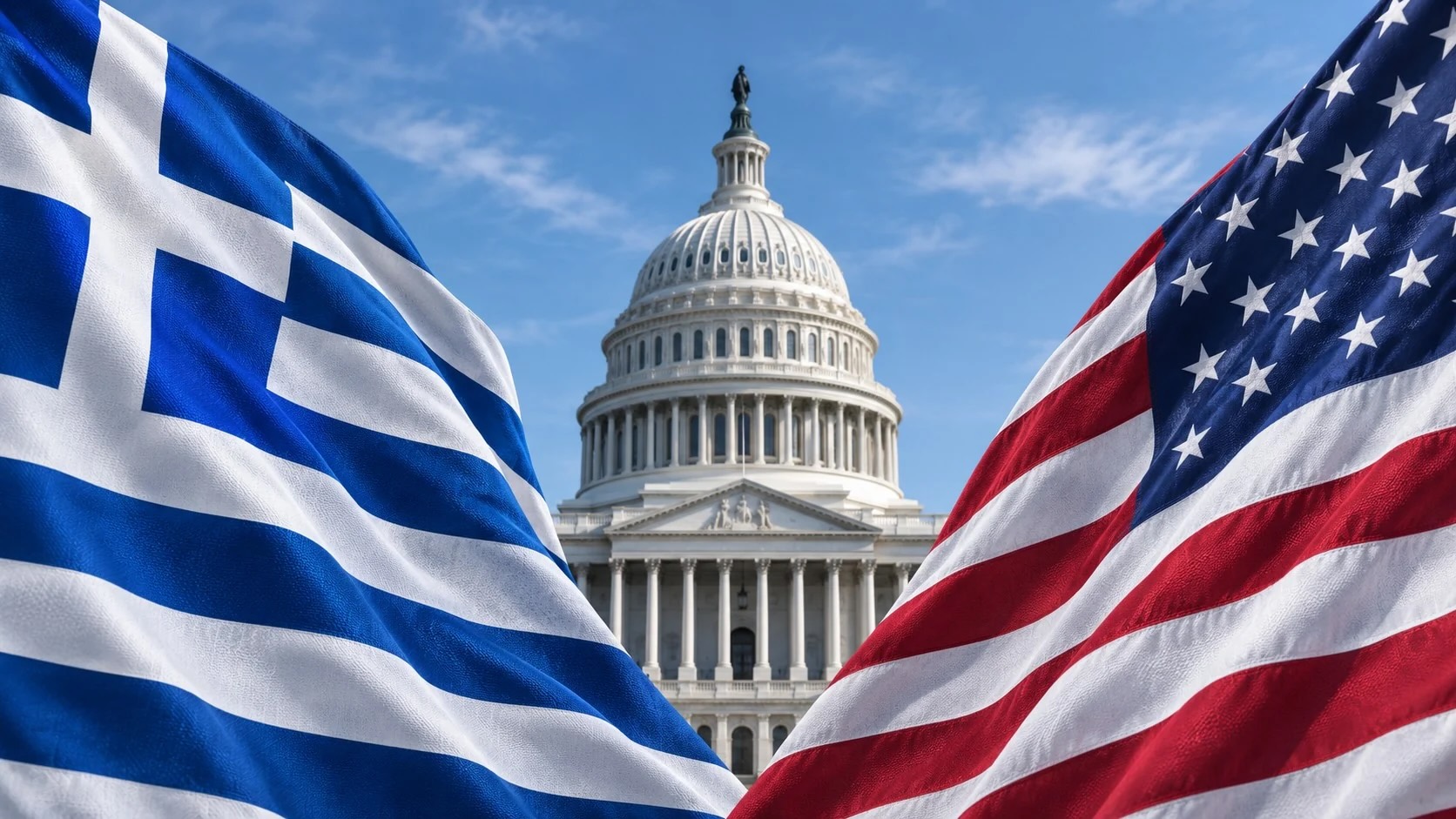
On the geopolitical front, the Democratic “blue wave” in the US midterms is being read in Athens as a change of venue rather than of strategy. Spokesman Marinakis stressed that the US remains a strategic ally and that agreements and major projects will not be affected. The government sees an asset in Greece’s bipartisan standing in Washington and is turning its attention to congressional leadership and the committees handling foreign policy and security. Several Greek-American members were elected or re-elected. Chris Pappas won a Senate seat in New Hampshire, and Bilirakis, Haridopolos, Patronis, Malliotakis, Goodlander and Titus all secured terms. Mitsotakis had already flagged the risk of a Congress shift and is preparing for renewed Gulf escalation, with its energy-market consequences. A weakened Trump retains wide room for unilateral foreign policy moves, so Athens must watch both the new Democratic oversight and the president’s reaction to losing Congress.
Brussels and the UN became the main arenas on the Turkey-Libya memorandum. The UN published Ambassador Balta’s 22 October letter rejecting the memorandum as contrary to UNCLOS and incapable of producing legal effects for third states. It followed the eastern Libyan parliament’s ratification on 20 October, and Greece, the EU, Cyprus, Egypt, Bahrain and the UAE issued a joint declaration of opposition. The Commission’s annual Turkey report went further, calling the memorandum “null and void.” It also cited Turkish obstruction of Great Sea Interconnector research, the 1995 casus belli, demands for island demilitarisation, objections to Greek Patriot and F-16 deployments, opposition to marine parks and maritime spatial planning, and increased overflights through September. It records Turkey’s alignment with EU foreign policy at only 4%, and recommends a gradual, conditional approach to cooperation, with Cyprus progress a prerequisite. Ankara rejected the report as biased and “maximalist,” while welcoming its references to economic policy, defence, and the Customs Union modernisation. Gerapetritis told a parliamentary committee that interconnector surveys should resume within 5 to 15 days, with operational plans ready for Turkish interference, and that Greece will not back Sinirlioglu’s UN Secretary-General bid. Nexans has sought a permit extension beyond 31 December.
On defence and security, Greece and Portugal signed a deal for three Embraer KC-390 transport and tanker aircraft, reportedly worth about €590 million, with deliveries starting next year and an option for three more. Dendias called it a game changer because Greece currently lacks air-to-air refuelling, and the aircraft will serve Rafales and Mirage 2000s at first and F-16s within a year. He also plans to present a new Air Force Space Command. Several European flights, including two Aegean Airlines services, were diverted over hoax bomb threats amid broader concern about hybrid threats. Migration pressure on Crete is acute: 1,326 arrivals in under three days, over 5,000 in October compared with about 2,000 a year earlier, and more than 650 people sleeping where garbage trucks park, 835 in Heraklion port and about 500 in Chania. Local resistance has delayed an official shelter, and Migration Minister Plevris says two Crete facilities will operate and none is planned for Ierapetra.
Domestically, 21 judges and prosecutors were drawn for the special court that will try former deputy minister Triantopoulos over the Tempe site, with the trial expected by mid-January 2027, so it will run into the campaign. Parliament approved private debt legislation with a fixed 3% rate for out-of-court settlements and fines of up to €5 million on loan servicers, up from €500,000.
The polling picture has ND at 23.4%, ELAS at 13.4%, PASOK at 11.4% and KKE at 7.1% in one survey. Nearly 70% want a change of government and 55% are dissatisfied with Mitsotakis, while ND’s lead leaves it without a clear path to a majority or coalition, making a second election the likeliest outcome. At Monday’s cabinet meeting Mitsotakis told ministers to deliver rather than campaign, set priorities for the last six months, and said the Turkey-Libya memorandum would not alter Greek plans. The priorities include the September fair tax measures, a further minimum wage rise towards €1,000 by early 2028, housing measures and defence procurement including seven more MH-60R helicopters. He also floated a global maritime truce to ease trade routes and living costs.
The economic mood darkened. IOBE found 63% of households “just about making ends meet”, up from 58%, and Greeks are again the EU’s most pessimistic consumers. Some 68% report a worsening household situation and 68% expect faster or equal price rises. Inflation reached 5.6% in October against 4% in the eurozone, driven by oil, with Black Friday expectations rising and 43% of shoppers sceptical about the discounts. VAT receipts reached €23 billion in nine months, with a record €30.8 billion forecast, so inflation is lifting revenue even as consumption weakens. The government has spent about €1.21 billion on energy measures this year, and the 2027 draft budget holds about €200 million for energy support, backed by a €1.25 billion contingency reserve.
In good news, Moody’s judged the banks’ buffers strong, citing return on equity of 12.1%, a cost-to-income ratio of 37.8% against 54.6% in Europe, CET1 around 14.8% and NPLs at 3.4%, while noting risks from new NPL inflows, deferred tax credits and cyber threats. M&A index is heading for a record year, with a pipeline above €7 billion.
Taken together, this week shows Greece strengthening its diplomatic and defence position, in Washington, Brussels and its own procurement, while households absorb an inflation shock that is eroding consumption and political goodwill ahead of an election the government cannot yet be sure of winning outright.