
Mitsotakis used his UNGA address to position Greece as a "pylon of stability" in the Eastern Mediterranean, pressing Turkey on the casus belli and dialogue preconditions, backing a two-state solution for Gaza, reaffirming support for Ukraine, and confirming Greece's forthcoming UN Security Council presidency in October — a platform Athens intends to use actively during what Mitsotakis described as a "particularly dangerous" period.
On the sidelines, he met Netanyahu to discuss regional developments, energy cooperation and preparations for a new Greece-Cyprus-Israel trilateral. Earlier in the week, Greece, Egypt and Cyprus signed a joint declaration committing to a coordinated military response to future threats against any of the three — a significant step toward institutionalising the trilateral defence framework, building on the El Alamein summit and the Medusa exercise.
Turkey's Defence Ministry issued a new round of escalatory statements, accusing Greece of illegally militarising Aegean islands, warning that the Great Sea Interconnector cable-laying would require Turkish sanction, and signalling that Cyprus's defence procurement trajectory is under close observation. Athens rejected the claims as legally unfounded, with Foreign Ministry spokesman Giannakoulias noting the contradiction of a country that maintains a standing casus belli accusing others of threatening regional stability. The Greek government meanwhile secured EU funding for the two marine parks in the Aegean and Ionian seas — the Kythira-anchored Ionian park and the Milos-Amorgos-anchored South Aegean park — advancing an initiative Turkey has consistently framed as a grey-zone provocation. Presidential decrees remain the final legal step.
Talks over the Parthenon Marbles effectively collapsed, according to the Daily Telegraph, with no active negotiations and none expected imminently, following the failure to find a loan-arrangement formula acceptable to both sides under existing British law.
Politically, the week crystallised a paradox that is now the defining feature of Greece's pre-electoral environment: 67% of voters want a change of government, yet no alternative has emerged. New Democracy leads at 24.3%, with ELAS at 14.4% and PASOK at 11.1%, producing a projected seat count — in the more granular poll — of 126 for ND, 49 for ELAS and 38 for PASOK, leaving ND well short of the 151-seat majority threshold. Satisfaction with government performance stands at 20%, with 58% "not at all satisfied" and 44% saying the government's price measures have produced "no results at all." Yet Mitsotakis retains higher trust ratings than Tsipras or Androulakis on economic management.
The government's internal read of the challenge is captured in a senior official formulation of "three plus three" electoral risks: the visible triad of inflation, a potential Turkish crisis, and a new scandal; and a quieter triad of rural voter erosion, right-wing defections, and the risk that high abstention no longer favours the incumbent. More than two million voters have disappeared from the ballot since 2004, with turnout falling from 76% to 53% — their potential re-engagement is now a central strategic variable for all parties.
The credit rating picture was the week's unambiguous positive. Scope Ratings upgraded Greece to BBB+, one notch above its 2024 rating, citing rapid debt reduction and improved medium-term growth prospects — on the same day Greek equities were reclassified to developed market status by Stoxx, S&P DJI and FTSE Russell. Moody's simultaneously upgraded its outlook from Stable to Positive, joining R&I and Morningstar DBRS in recent weeks, with S&P and Fitch assessments still ahead in October and November.
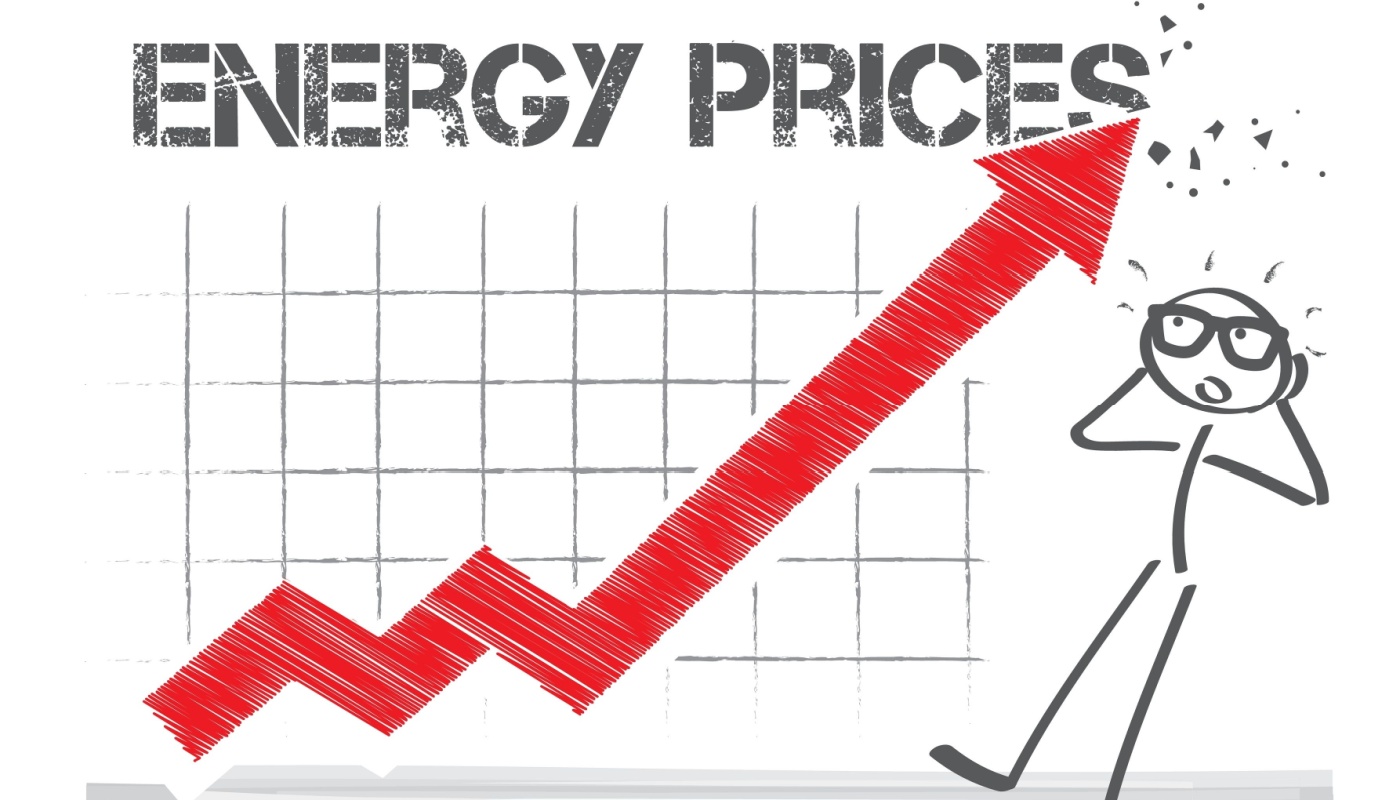
The state budget primary surplus reached €6.5 billion for January-August, exceeding the target by €1.5 billion. The current account, however, continues to deteriorate: the deficit widened by €1.5 billion in the first seven months to €9.3 billion, driven primarily by energy import costs and secondary income balance deterioration, even as tourism receipts rose 12%. Inflation is projected at 3.5% for 2026, with energy the primary driver, and 16 industrial associations jointly demanded government activation of the EU's CISAF energy support framework — already deployed by Germany, Italy and others — to protect energy-intensive manufacturers ahead of winter.
Greece's asylum recognition rate has fallen sharply to 37% for January-August, down from 72% in 2024, as individualised criteria and safe third country considerations are applied more systematically. Finance Minister Pierrakakis, in his Eurogroup capacity, proposed a European Spectrum Union that would channel proceeds from future 6G spectrum sales — estimated at €12-15 billion — toward EU budget financing, a creative contribution to the MFF own-resources debate.
Household financial stress data continued to paint a difficult picture. Sixty percent of Greek respondents in Intrum's European Consumer Payment Report had borrowed money or used credit cards to pay bills in the past six months, against a European average of 56%, while 47% had used buy-now-pay-later services.
Visitor numbers to major archaeological sites fell 5.7% in the first five months of 2026 year-on-year, with Olympia, Delphi, Knossos and the Acropolis all recording declines — a concern for heritage tourism revenue at a moment when the sector is otherwise performing strongly.
Taken together, this is a Greece whose institutional and financial credibility is at its strongest in decades — developed market reclassification, investment-grade upgrades, and primary surplus outperformance — but whose political legitimacy is running on fumes, with a majority of voters wanting change they cannot yet identify, and an Aegean environment where Turkey's escalatory posture is methodically testing the limits of Athens's deterrence framework.